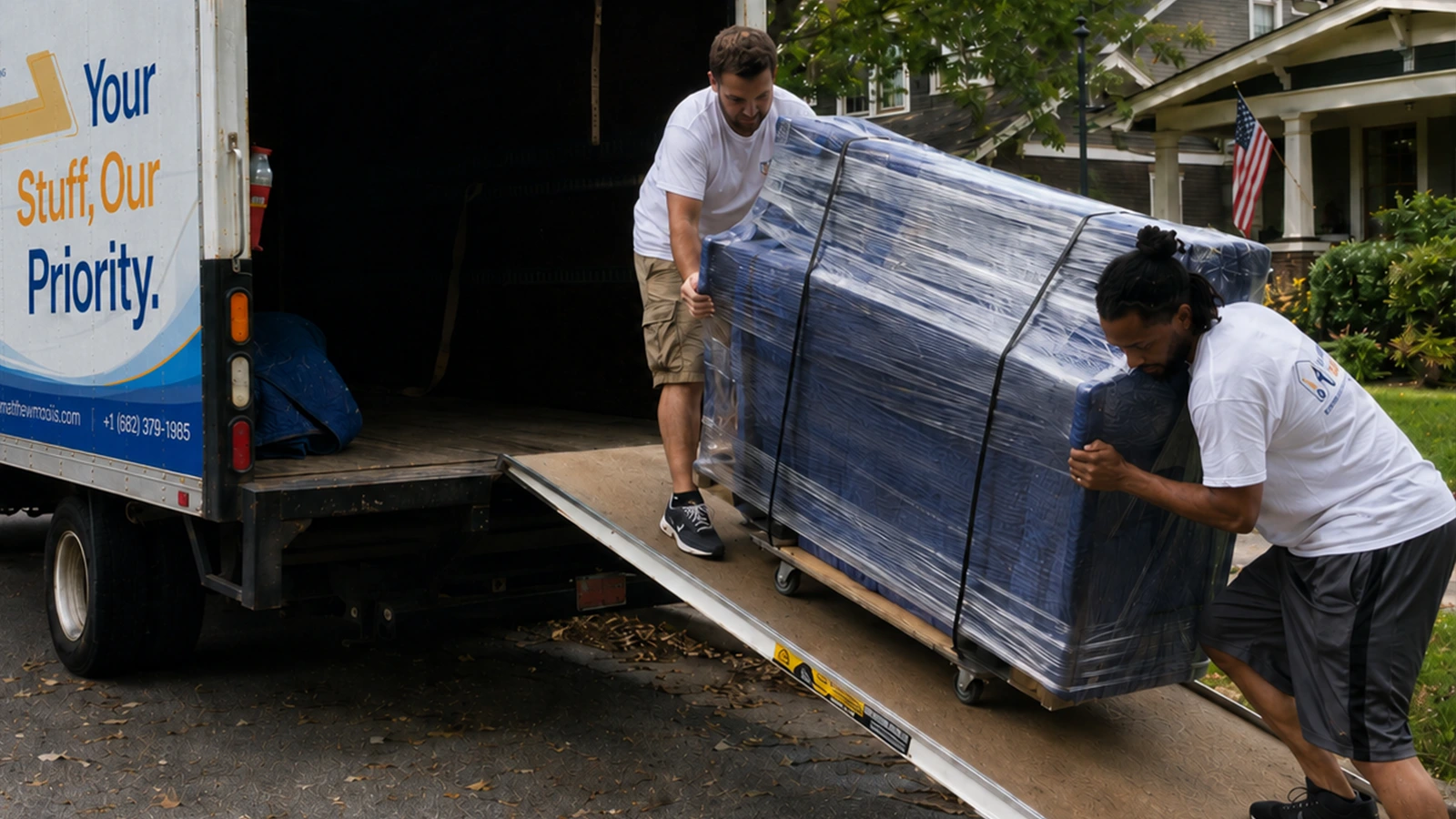
Specialty Moving Services for Pianos, Gun Safes, Antiques and Oversized Furniture
Some pieces cannot be replaced if they are damaged. Those get planned before moving day rather than improvised on it, and they stay on our truck with our crew the whole way.
Specialty moving services cover the pieces that a standard load plan does not handle safely: pianos, gun safes, antiques, oversized furniture, and fragile household items. Matthew & Mois is a family-owned direct carrier licensed under MC 1710429 and USDOT 4368130, which means the crew that loads your home and the truck that carries it both belong to the same company that delivers it. We ask about specialty items during booking so the right equipment, protective materials, and techniques are ready before moving day rather than improvised on it. Every item needs a different level of protection, and our crews are trained to recognize the right method for each piece. Furniture is disassembled when it has to be, wrapped, labeled, inventoried, and put back together at delivery.
It is not about price. It is about what happens if it breaks.
A specialty item is not simply an expensive one. It is a piece where ordinary handling creates real risk, usually for one of three reasons.
Heavier than it looks
The weight is the first surprise, and it is usually the reason an untrained lift goes wrong.
The weight sits wrong
When the mass is off-centre, a piece that two people can lift is still a piece that can turn over.
The fragile part is hidden
A joint, a soundboard, or a veneer can fail without a mark showing on the outside.
A piano is all three at once, and a gun safe is dense in a way that surprises people who have not moved one. An antique can weigh very little and still be the hardest thing on the truck, because a joint that has held for a century can fail in a single bad lift.
The items our crews handle regularly
And the honest limit. If you have something unusual that is not on that list, ask before you book rather than after. Some pieces need a plan we would want to make in advance, and a few need a trade we would tell you to hire directly. We would rather say so at the quote than discover it in your living room.
Tell us about the piece before moving day, not on it.
The work that happens before anyone lifts anything
This is the part most people do not expect. The single biggest factor in whether a specialty item arrives safely is not strength on move day. It is what we know about the piece beforehand.
We ask every customer about specialty items during booking. You can send photos or a short video, which is genuinely useful for anything unusually sized or shaped, and it is the fastest way for us to see what we are dealing with. From that we prepare the equipment, the protective materials, and the technique before the truck leaves.
When a piece gets skipped in that conversation, two things happen. The crew improvises, which is where damage comes from. And the price moves, because specialty handling that nobody planned for is one of the most common reasons a moving estimate changes.
Planned before the truck leaves.
Wrapped and padded, and crated when the piece calls for it
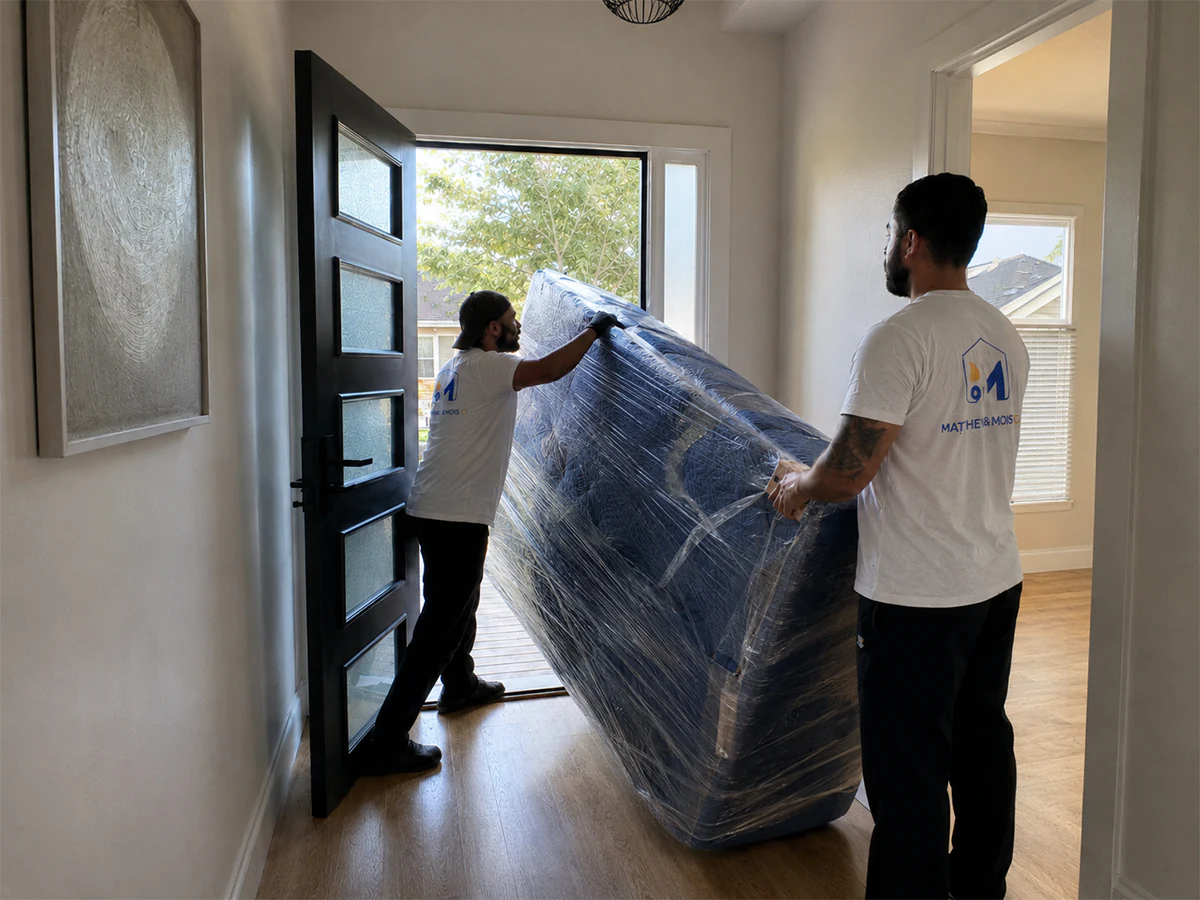
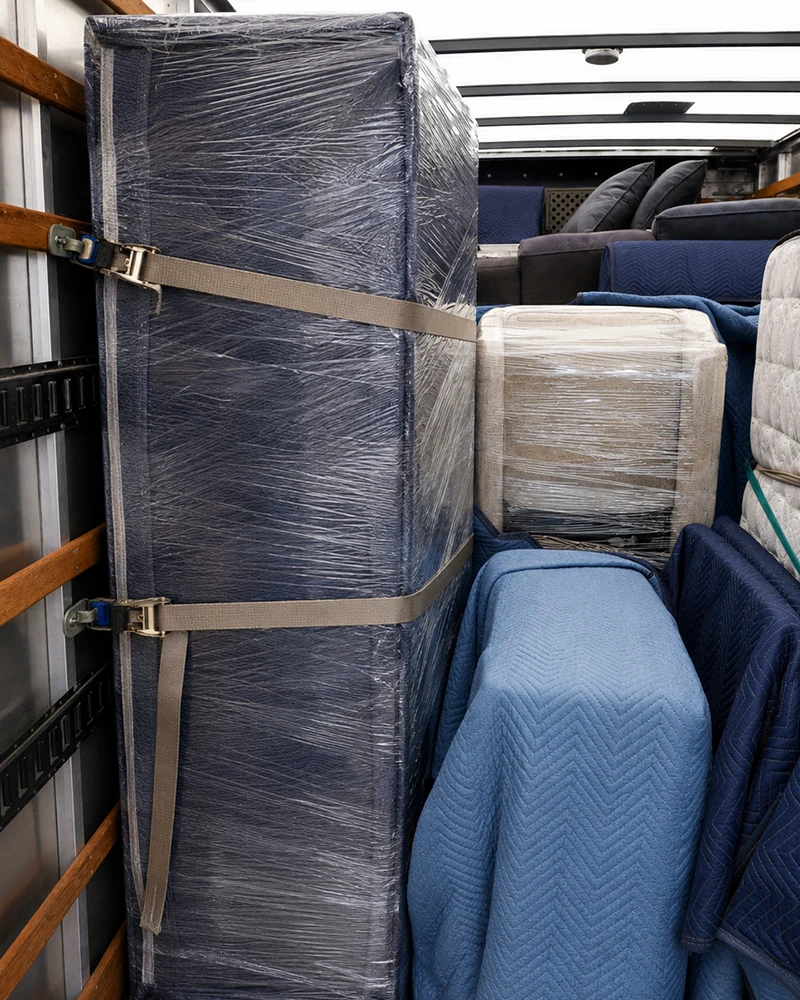
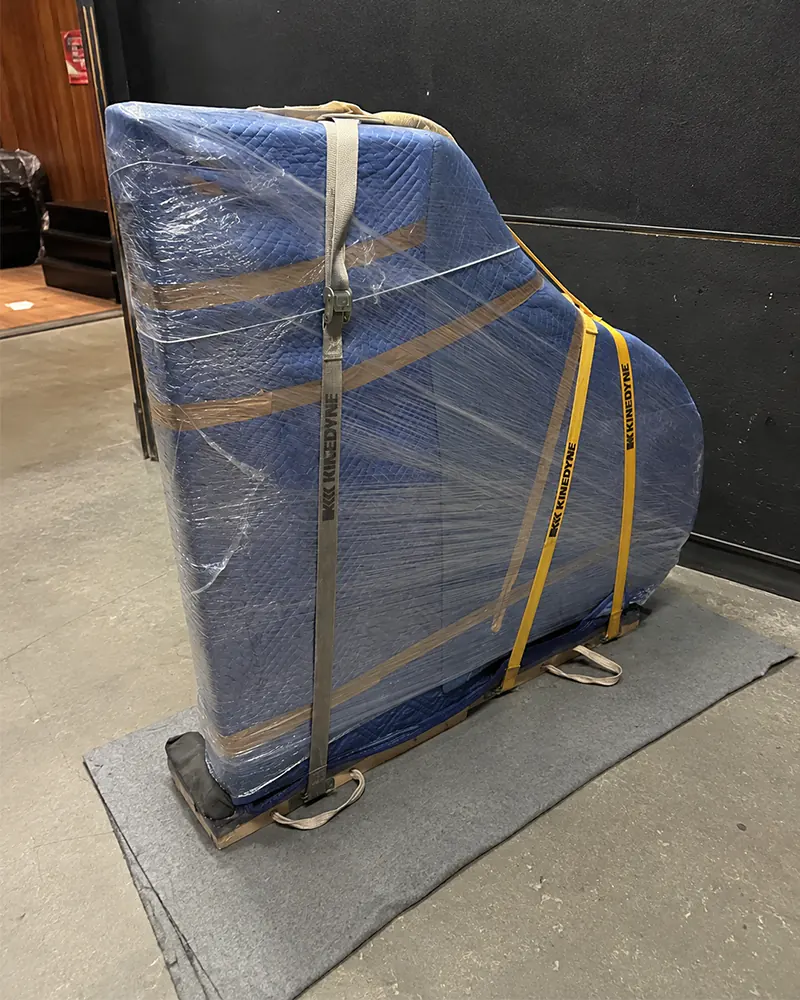 Blanket-wrapped, shrink-wrapped, strapped, on a board
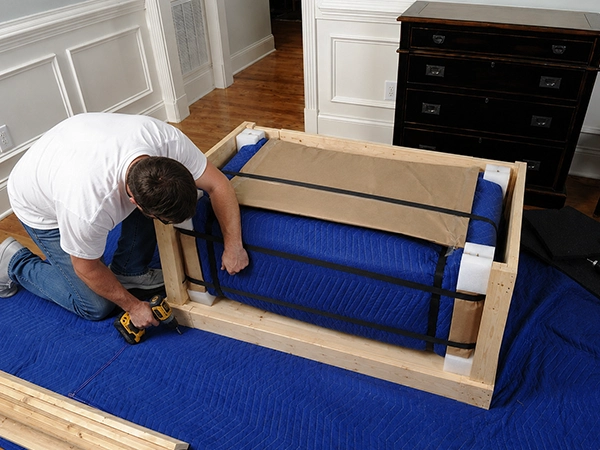 A crate built around the piece, on site
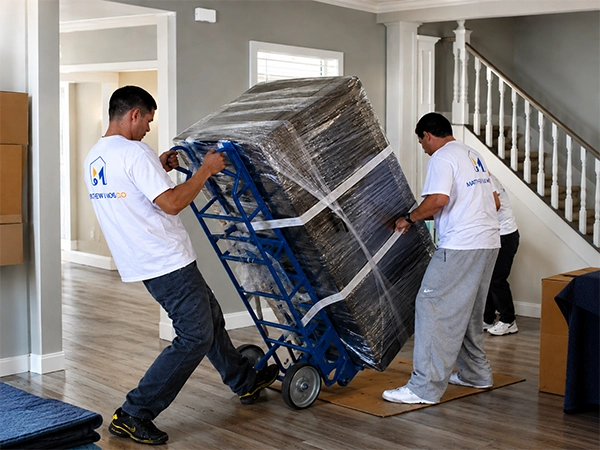 A safe wrapped and secured before it moves
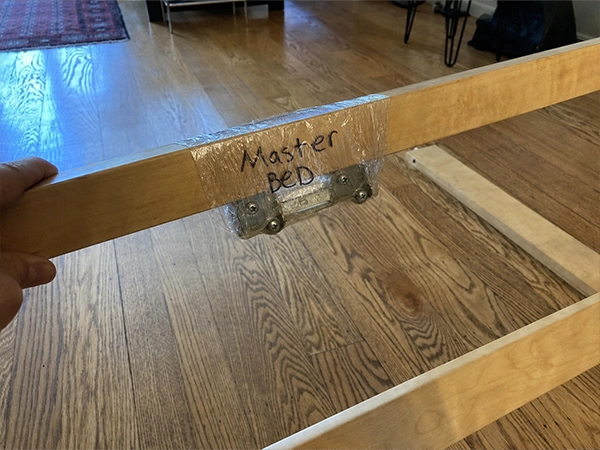 Hardware taped to the piece it came off
Getting it out of the room it lives in
Most of the difficulty with a specialty piece is not the truck. It is the doorway, and the turn at the bottom of the stairs, and whether the floor survives the trip out.
That is the part we want to know about in advance. A photo of the room and the route out of it tells us more than a description ever does, which is why we ask for one whenever a piece is unusually sized or shaped.
On the day, the piece is wrapped where it stands, moved on the equipment suited to it, and loaded in the position it needs to travel in.
From the first phone call to the piece back in its room
Plan
Tell us at booking
Specialty items get raised during the quote conversation, and photos or video help for anything unusual.
Equipment and materials prepared
We prepare the proper equipment and protective materials for the specific pieces before moving day.
Protect
Disassembled where it has to be
Furniture comes apart when taking it apart is the safer option, and hardware stays with the piece it belongs to.
Wrapped to the piece
Every item gets the level of protection it actually needs, not a single standard treatment applied to everything.
Crated when the piece calls for it
Some pieces need a crate built around them rather than blankets and wrap.
Deliver
Reassembled and placed
At delivery we put furniture back together and set pieces where you want them, then walk the inventory with you.
If your new place is not ready yet, specialty pieces can wait in our warehouse under the same care until you are.
The fewer times it is handled, the less can go wrong
Every time a specialty piece changes hands, changes trucks, or sits in a facility waiting to be reloaded, the risk goes up. That is not a claim about anyone else's crew, just a count of how many chances there are for something to go wrong.
Matthew & Mois is a direct carrier. We are not a broker who sells your move to whichever truck is available. Our crew loads your home, our truck carries it, and our crew is there at delivery. For a distant delivery we may bring in experienced local helpers to assist with the unloading, and our crew supervises that work from start to finish.
Being straight about one thing: shipments do share a trailer. We use divider systems, and your belongings are inventoried, but we are not going to tell you a truck runs empty for one piano because that is not how interstate moving works. What we will tell you is who is responsible for your piece at every point, and the answer does not change.
About the value of what you are shipping. Interstate movers do not sell insurance. What we provide is valuation coverage, which is carrier liability set by contract, and the federal rules require it to be offered to you in writing before your move. If you are shipping a piece worth significantly more than its weight suggests, that conversation matters more than any sentence on this page. Ask us to walk you through the options on your estimate.
The federal regulator explains how estimates, liability and valuation work on an interstate move: FMCSA, Your Rights and Responsibilities When You Move.
One crew, one truck, from your door to theirs.
Four questions before you hand anyone a piano
Ask them of us too. If a company will not answer these plainly, that tells you something.
Are you the carrier, or are you selling my move to someone else?
Will the crew that loads my piece be the crew that delivers it?
What protection is going on this specific item, and will it be crated?
How does valuation coverage work, and what would it pay on this piece?
Get a plan for the piece you are worried about.
Questions people ask about specialty items
Can you move a piano?
Can you move a gun safe?
Should I empty a gun safe before the move?
How do you protect antiques and fragile pieces?
Do you take furniture apart and put it back together?
Are my specialty items insured?
Will specialty items change my price?
Texas families, in their own words
Tell us what you are shipping
List the specialty pieces when you send this over, and add photos if anything is unusually sized or shaped. That is what lets us put a real number and a real plan in front of you instead of a guess.
We are a family company, and we move memories, not boxes. Your things get handled the way we would want someone handling ours.